
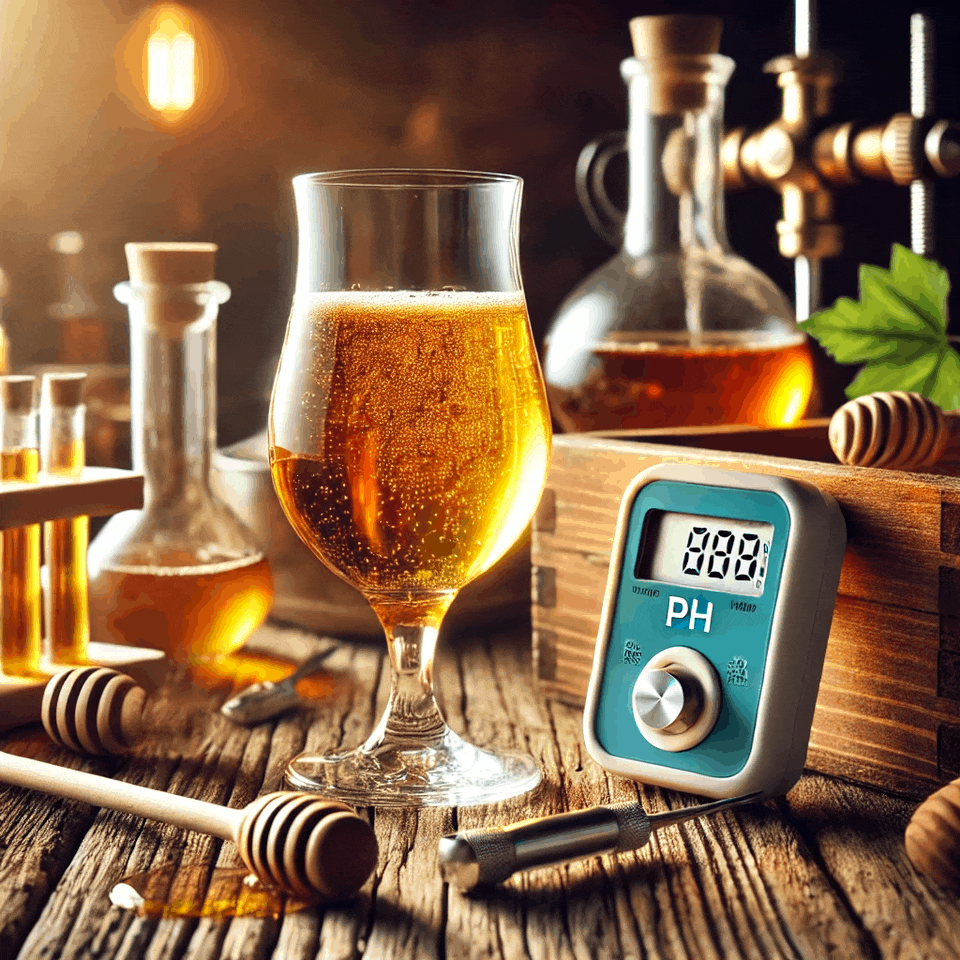
In the world of homebrewing, mead—an alcoholic beverage created by fermenting honey with water—has seen a resurgence in popularity. For thousands of years, mead has been celebrated for its versatility and rich cultural history. Today, modern homebrewers continue to push the boundaries of this ancient drink, experimenting with fruits, spices, and barrel aging to create a variety of mead styles. Yet, amid all the creativity and artistry, the science of mead-making cannot be overlooked, particularly when it comes to controlling pH levels.
pH, a measure of acidity or alkalinity, is one of the most critical factors that can influence every stage of the mead-making process. From fermentation to flavor development and even the final stability of the beverage, pH management is key. This article will explore how pH levels interact with fermentation, how they can shape the flavor profile of your mead, and why understanding acidity is essential for creating a stable and enjoyable final product.
What is pH, and Why Does it Matter in Mead Making?
pH is a logarithmic scale that me
asures how acidic or basic (alkaline) a solution is, ranging from 0 (very acidic) to 14 (very alkaline), with 7 being neutral. In mead-making, as in most fermentation processes, pH levels are critical because they affect both the yeast’s performance and the overall quality of the finished product.
During fermentation, yeast consumes sugars in honey and converts them into alcohol and carbon dioxide. However, the conditions in which the yeast operates are crucial to achieving a successful fermentation. If the pH is too low (too acidic), the yeast may become stressed, slowing or halting the fermentation process. Conversely, if the pH is too high (too alkaline), the mead could become prone to spoilage by harmful bacteria. For this reason, managing the pH of the must (the honey-water mixture before fermentation) is a delicate balance that can mean the difference between a vibrant, flavorful mead and a failed batch.
The Role of pH in Yeast Health and Fermentation
Yeast is a living organism that thrives within a specific pH range, generally between 3.7 and 4.6 for optimal activity during mead fermentation. Outside of this range, yeast can become sluggish or die off, leading to stalled fermentation or the production of undesirable off-flavors.
Low pH and Its Impact on Yeast
A pH level that is too low (below 3.5) can create an acidic environment where yeast becomes stressed. This stress may lead to the production of undesirable compounds, such as hydrogen sulfide (which smells like rotten eggs), or volatile acidity, which imparts a sour, vinegary taste. Furthermore, yeast stressed by low pH may not fully ferment all available sugars, leaving the mead with residual sweetness and potential instability.
One key issue with low pH is that it can disrupt the yeast’s ability to transport nutrients across its cell membrane, making it harder for the yeast to metabolize sugars efficiently. This can result in a slow or stuck fermentation, where the yeast either takes much longer to finish fermenting or stops altogether. For homebrewers, monitoring and adjusting the pH of the must, especially during the early stages of fermentation, is essential to avoid these pitfalls.
High pH and the Risk of Contamination
On the other hand, if the pH is too high (above 4.6), the must becomes more susceptible to contamination from unwanted bacteria, mold, and wild yeasts. These microorganisms can outcompete the brewer’s yeast, leading to spoiled mead with unpleasant off-flavors. High pH levels can also result in a flat-tasting mead, lacking in the brightness and complexity that many homebrewers strive for.
Moreover, higher pH environments encourage the growth of lactic acid bacteria and acetobacter, which can lead to spoilage or unwanted acidity over time. Proper pH management is crucial not only for yeast health during fermentation but also for protecting the mead from microbial spoilage throughout its production and storage.
pH and Flavor Development
While pH plays a critical role in fermentation, it also has a direct impact on the sensory characteristics of mead. Acidity in mead—much like in wine or beer—can enhance or suppress certain flavors, affecting the overall balance and mouthfeel of the drink.
The Balance Between Sweetness and Acidity
The interplay between sweetness and acidity is one of the defining elements of a great mead. Acidity provides balance to the natural sweetness of honey, preventing the mead from becoming overly cloying. If the pH is too low and the acidity is too high, the mead may taste harsh or overly tart. If the acidity is too low, the mead may taste too sweet and lack complexity.
In mead-making, the perception of acidity can also be influenced by the residual sugar left after fermentation. Sweet meads generally require more acidity to maintain balance, while dry meads with little residual sugar can benefit from a slightly lower pH to enhance their crispness and brightness. A well-balanced mead will have just enough acidity to provide structure and lift, without overpowering the natural honey flavors.
Acidity and Flavor Expression
Different styles of mead—whether traditional, melomel (fruit mead), or metheglin (spiced mead)—can benefit from tailored pH levels. In fruit meads, the natural acidity of the fruit will interact with the honey’s sweetness to create a unique flavor profile. For example, citrus fruits, which are naturally acidic, can add brightness and sharpness to the mead, while fruits like berries may contribute more tannic or earthy notes that complement the honey’s floral sweetness.
Managing pH allows brewers to fine-tune the flavor expression of their meads. Higher acidity can bring out sharp, refreshing qualities in lighter meads, while lower acidity may lend a softer, more rounded mouthfeel to richer, dessert-style meads. In this way, pH serves as a powerful tool for brewers to control the sensory profile of their final product.
Monitoring and Adjusting pH in Mead Making
Given the importance of pH in fermentation and flavor development, homebrewers should regularly monitor the pH of their mead throughout the brewing process. pH can fluctuate during fermentation due to the production of organic acids by yeast, so it’s essential to measure and, if necessary, adjust the pH at various stages.
Measuring pH
A digital pH meter is the most accurate tool for measuring pH in mead. These devices provide precise readings, typically to the nearest hundredth of a pH point, which is important when making fine adjustments. While pH strips are available and inexpensive, they often lack the precision required for mead-making and can be difficult to interpret, especially in darker meads where color can interfere with the reading.
Homebrewers should measure pH at several critical points: before fermentation (the must), during active fermentation, and after fermentation is complete. This allows for close monitoring of the yeast’s environment and ensures the pH stays within the optimal range for healthy fermentation.
Adjusting pH
There are several methods to adjust the pH of mead, depending on whether the pH is too high or too low. For lowering pH (increasing acidity), food-grade acids like citric acid, malic acid, or tartaric acid can be added in small amounts to the must or during fermentation. These acids are often found naturally in fruits and can help bring the pH into the optimal range for yeast health and flavor development.
To raise the pH (reduce acidity), potassium bicarbonate or calcium carbonate can be used. These compounds neutralize excess acid and are commonly used in winemaking to correct overly acidic musts. However, brewers must be cautious when adding these compounds, as over-adjustment can lead to off-flavors or an imbalanced final product.
pH and Mead Stability
Beyond fermentation and flavor, pH also plays a critical role in the long-term stability of mead. After fermentation is complete, the pH of the mead will influence its shelf life and susceptibility to spoilage.
Microbial Stability
A properly balanced pH helps protect mead from microbial spoilage. As mentioned earlier, high pH levels create an environment where harmful bacteria and molds can thrive, leading to the risk of contamination. Mead with a pH below 3.6 is generally considered stable against microbial growth, as most spoilage organisms cannot survive in such acidic conditions.
Maintaining a lower pH can also reduce the need for preservatives like sulfites, which are commonly used in winemaking to prevent oxidation and microbial growth. For homebrewers seeking to create natural, additive-free meads, managing pH offers a way to achieve microbial stability without relying on chemical preservatives.
Oxidation and Aging
pH also influences how mead ages. Higher pH meads are more susceptible to oxidation, which can lead to browning and the development of off-flavors over time. Conversely, lower pH meads tend to age more gracefully, retaining their color and flavor for longer periods. Homebrewers who plan to age their meads should aim for a lower pH to ensure their mead remains stable and enjoyable over time.
Conclusion: Mastering pH for Better Mead
For homebrewers looking to elevate their mead-making skills, understanding and managing pH is essential. Whether it’s ensuring a healthy fermentation, fine-tuning the flavor balance, or extending the shelf life of the final product, pH control is a powerful tool that can make or break a batch of mead. By monitoring and adjusting pH levels throughout the brewing process, brewers can create more consistent, flavorful, and stable meads that showcase the best of what honey has to offer.
As with any aspect of brewing, practice makes perfect. Homebrewers who take the time to experiment with pH adjustments will not only gain a deeper understanding of how acidity affects their mead but will also develop the confidence to craft more complex and enjoyable beverages. Mastering pH is not just about science—it’s about unlocking the full potential of your mead.